Annual Crane Inspection Requirements: What OSHA Says
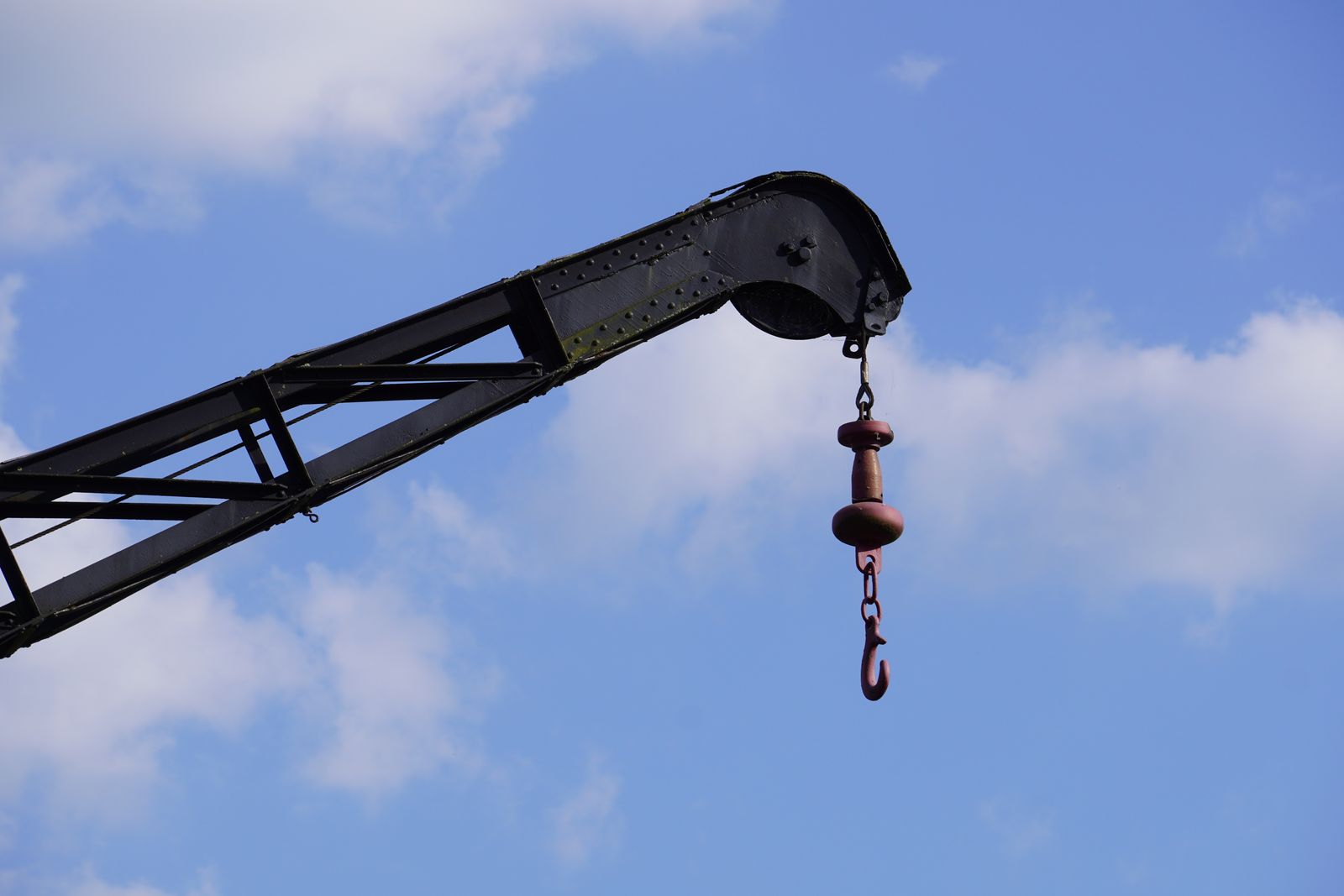
The OSHA annual crane inspection, called the annual/comprehensive inspection in 1926.1412(f), is done at least every 12 months by a qualified person. It covers everything in the shift inspection plus a 21-item list, with disassembly as needed and functional testing. The record must show the items checked and the results, plus the inspector's name, signature and the date, and you keep it at least 12 months. Federally it does not have to be a third party, but most customers and two big states expect one.
Who can do it
The federal text says a "qualified person." Under 1926.1401, that is someone who, "by possession of a recognized degree, certificate, or professional standing, or who by extensive knowledge, training and experience, successfully demonstrated the ability to solve/resolve problems relating to the subject matter, the work, or the project."
So your own mechanic can do the annual if they meet that bar. In practice, most small shops hire a third-party inspector, for three reasons:
- Customers ask for it. GC and owner forms routinely say "annual 3rd party inspection." The NIH checklist wants the "Complete Crane Inspection, (Third Party) not just cover sheet."
- Insurers ask for it. Underwriters want inspection reports with the application.
- It ends the argument. A compliance officer is told to "identify who did the inspection and verify that inspector's qualifications." A certified outside inspector is the easy answer.
State rules can take the choice away. California requires a Cal/OSHA licensed certifier for cranes over three tons, and Washington requires an accredited crane certifier with a proof load test. See California crane certification and Washington's crane rules.
What gets inspected
First, everything on the shift list in 1926.1412(d). Then, per 1926.1412(f)(2), with disassembly "as necessary":
- Structure, boom and jib: deformed, cracked or corroded members, loose or failed fasteners, cracked welds
- Sheaves and drums for cracks or significant wear
- Pins, bearings, shafts, gears, rollers and locking devices
- Brake and clutch parts, linings, pawls and ratchets
- Safety devices and operational aids, "including significant inaccuracies"
- Power plant, including exhaust leaks and the emergency shutdown
- Chains and sprockets
- Travel steering, brakes and locking devices
- Tires
- Hoses, fittings and tubing
- Hydraulic and pneumatic pumps and motors
- Valves, including relief valves reaching correct pressure
- Cylinders: drift, rod seals, scored rods, dented barrels, rod eyes
- Outrigger or stabilizer pads and floats
- Slider pads
- Electrical components and wiring
- Warning labels and decals: missing or unreadable
- Operator seat: missing
- Operator seat: unserviceable
- Steps, ladders, handrails, guards: missing
- Steps, ladders, handrails, guards: unusable or unsafe
Item 5 is where the load moment indicator or rated capacity limiter gets checked for accuracy. Item 17 is the one owners grumble about: a scuffed decal can fail a crane.
The inspection "must include functional testing to determine that the equipment as configured in the inspection is functioning properly" (1926.1412(f)(3)).
The wire rope annual
1926.1413(c) adds a rope inspection at the same interval. The qualified person covers "the surface of the entire length of the wire ropes," with attention to the critical review items, sections normally hidden during shift and monthly checks, rope subject to reverse bends, and rope passing over sheaves. If the setup or site makes that infeasible, it must happen as soon as feasible, but no more than 6 more months for running ropes, and at disassembly for standing ropes. It is documented the same way as the annual.
What happens to deficiencies
For every deficiency, the qualified person makes "an immediate determination" (1926.1412(f)(4)):
| Determination | What happens |
|---|---|
| Safety hazard | Out of service until corrected, except where temporary alternative measures are allowed for safety devices and operational aids |
| Not a hazard yet, needs monitoring | Checked in every monthly inspection until resolved |
| Acceptable | Noted, no action |
The monitor list is the link between the annual and the monthlies. If your inspector writes "monitor slight drift on the boom hoist cylinder," that line belongs on your next monthly sheet. See monthly crane inspection documentation.
What the record must show
1926.1412(f)(7): "The following information must be documented, maintained, and retained for a minimum of 12 months, by the employer that conducts the inspection: (i) The items checked and the results of the inspection. (ii) The name and signature of the person who conducted the inspection and the date."
That is the federal minimum. A typical third-party report goes further: crane make, model and serial, hour meter, a pass, fail or N/A per item, a deficiency list with corrective actions, the inspector's certification number, and often a decal or certificate. Ask for all of it in writing, and keep the full report, not just the certificate.
Twelve months, and how to not miss it
"At least every 12 months" means the clock does not stretch. Practical habits:
- Book the next annual when you get the current one, a few weeks before the due date.
- Track the due date per crane, not per fleet. Cranes bought or rebuilt at different times drift apart.
- If a crane sits 3 months or more, it needs a qualified person's monthly-type inspection before use anyway (1926.1412(h)). Some GCs want a fresh annual after long idle time or after a lattice crane is reassembled.
- After a severe-service event (possible overload, shock load), stop and get a qualified person's inspection before the annual date even comes up (1926.1412(g)).
Before you book: questions for the inspector
A few minutes on the phone saves a second trip.
- What will I get back? Ask for the full checklist report with every item, not only a certificate or decal.
- What is your qualification? Certification number, and for California or Washington, the state license or accreditation.
- Do you inspect the full rope length? If the setup will not allow it, ask how they will document the deferral.
- How do you check the LMI or RCL? Item 5 calls for "significant inaccuracies," so ask whether they test with a known load.
- What do you need from me? The OEM manual, the last annual, the monthlies and repair records since then. Having them ready shortens the visit.
- How do you write up monitor items? You want each one named clearly so it can go straight onto your monthly sheet.
After the visit, read the report the same day. If a deficiency is marked as a safety hazard, the crane is tagged out until it is fixed (1926.1417(f) requires the tag in the cab). If the report is missing a page or a signature, ask now, not when a GC asks.
Retention: 12 months is the floor
Federally, 12 months. California requires annual records to be kept 48 months. Many owners keep every annual for the life of the crane because buyers, insurers and lawyers all ask for history. See how long to keep crane inspection records.
For how the annual fits with shift and monthly inspections, read the OSHA crane inspection schedule.
Where CraneFile fits
We're building CraneFile with a handful of crane shops. You forward the inspector's PDF, and it lands in that crane's file with the due date set, the monitor items carried onto the monthly checklist, and a reminder before the next one is due. The current annual and full report go out in the GC packet as one link. It is not live yet. If you want in early, reserve a spot or call us at (786) 471-4419.
This is plain-English guidance, not legal advice. The regulation text governs, and state rules can require a licensed certifier.
Questions we get
Does OSHA require a third-party annual crane inspection?
No. Federal 1926.1412(f) requires a qualified person, which can be your own employee if they meet the 1926.1401 definition. Many GCs, owners and insurers require a third party anyway, and California and Washington require state-licensed or accredited certifiers.
What must the annual crane inspection record show?
The items checked and the results, and the name and signature of the person who did the inspection and the date. It must be retained at least 12 months by the employer that conducts the inspection.
Can I go 13 months between annual crane inspections?
No. The rule says at least every 12 months. Most shops schedule the annual a few weeks early so a breakdown or a busy inspector does not push them past the date.
Does the annual include the wire rope?
Yes. 1926.1413(c) requires a qualified person to inspect the surface of the entire length of the wire ropes at least every 12 months, documented the same way as the annual. Running rope may be deferred up to 6 more months only if the setup or site makes it infeasible.
Tired of chasing this paperwork?
We're building CraneFile with a handful of crane shops: every crane's and operator's papers kept current, and one link for the GC. Want in early? Reserve a founding spot or call us at (786) 471-4419.
This is plain-English guidance, not legal advice. The regulation text and your state's rules govern.
Keep reading
OSHA Crane Inspection Schedule: Shift, Monthly, Annual
What 29 CFR 1926.1412 requires every shift, every month and every 12 months, who does each inspection, what goes on paper, and how long you keep it.

Monthly Crane Inspection: What to Document (1926.1412(e))
What OSHA's monthly crane inspection covers, the three things the record must show, who signs it, how long to keep it, and a checklist you can copy.

Green Sticker Crane Inspections: What the CraneSafe Sticker Means
What Green Sticker by CraneSafe is, who runs it, how a GC checks a sticker, and how it fits with OSHA's annual inspection and California and Washington rules.