Crane Operator Qualification vs Certification: 1926.1427
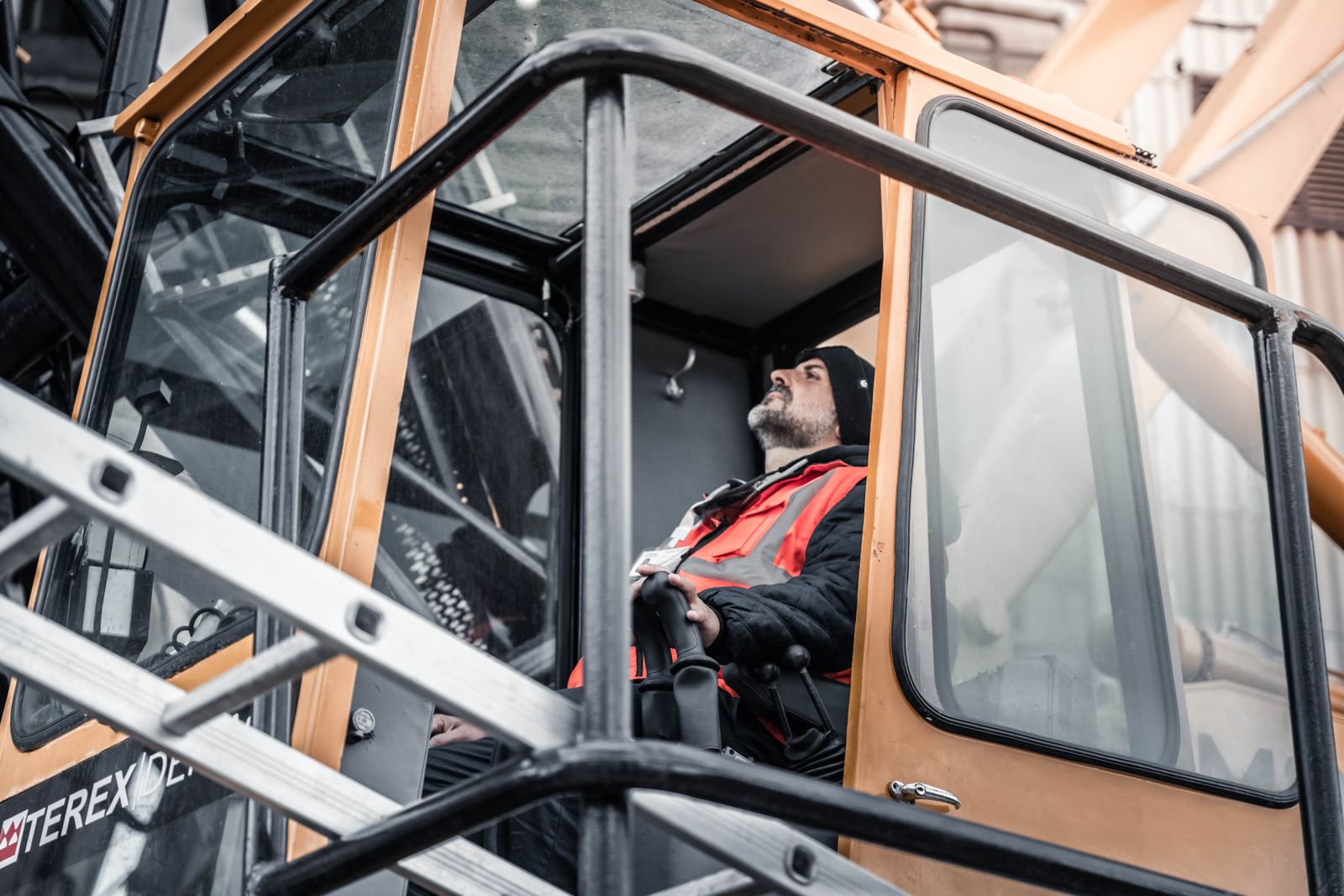
Under 29 CFR 1926.1427, every crane operator on a construction job needs three things: training, a certification or license, and a documented evaluation by their employer. The card in the operator's wallet covers the certification. The evaluation is your company's own sign-off that this person can run this crane in this configuration, and it has to be on paper at the jobsite. Certifications last up to 5 years, and you pay for them.
The three requirements
1926.1427(a) says the employer "must ensure that each operator is trained, certified/licensed, and evaluated" before operating covered equipment. Those are three different things.
| Requirement | What it is | Who provides it | Portable? | How long |
|---|---|---|---|---|
| Training | Formal and practical instruction | Employer | n/a | Ongoing, retrain when needed |
| Certification or license | Written and practical tests by crane type | Accredited testing body, audited employer program, or government license | Accredited cert: yes. Employer program: no | 5 years max |
| Evaluation | Employer verifies skills on the actual equipment and configuration | Employer's evaluator | No | While employed, redo after retraining |
Exempt from 1427: derricks, sideboom cranes, and equipment rated 2,000 pounds or less. Training duties in those other sections still apply.
Certification: the card
There are three ways to meet the certification part.
1. A state or local license. Where a state or city licenses crane operators and its program meets OSHA's criteria, the operator must hold that license to work there (1926.1427(c)(1)). Pennsylvania and Massachusetts are examples of states that license operators. For OSHA purposes a license counts for the period the office sets, up to 5 years.
2. An accredited testing organization. This is the common path. The testing body must be accredited by a nationally recognized accrediting agency, give written and practical tests, and certify "based on equipment type, or type and capacity" (1926.1427(d)). The cert is portable between employers and valid 5 years. You will see cards from NCCCO (now operating as CCO Certification), NCCER and CIC. CCO cards can be checked at verifycco.org.
3. An audited employer program. A company can run its own testing if an outside auditor approves the tests and audits the program within 3 months of start and every 3 years after (1926.1427(e)). It is valid 5 years but not portable. Small shops rarely go this way.
Two details people miss:
- Language. The certification documentation must note the language the test was given in, and the operator may only run equipment whose manuals and load charts are in that language (1926.1427(h)(2)).
- Cost. "The employer must provide the certification/licensure at no cost to employees" (1926.1427(c)(3)).
Qualification: the evaluation
This is the part the 2018 rule made explicit. OSHA's final rule, published November 9, 2018, changed certification to "type" or "type and capacity," kept the training duty, and spelled out the employer's evaluation. The evaluation and documentation duties took effect February 7, 2019.
The evaluation must show the operator has the skills, knowledge and "ability to recognize and avert risk" for the equipment, "including those specific to the safety devices, operational aids, software, and the size and configuration of the equipment," which includes lifting capacity, boom length, attachments, luffing jib and counterweight setup (1926.1427(f)(1)). It also covers the hoisting the job needs, such as blind lifts, personnel hoisting and multi-crane lifts.
And this line settles a lot of arguments: "Possession of a certificate or degree cannot, by itself, cause a person to be qualified" for the evaluation (1926.1427(f)(3)). The card gets an operator in the door. The evaluation says they can run your 60-ton with the jib on.
The evaluator must be your employee or agent and have the knowledge and experience to assess operators. Once someone passes, you can let them run other equipment that you can show does not need substantially different skills.
The full field-by-field breakdown is in the 1926.1427(f) operator evaluation.
What the evaluation document must show
Per 1926.1427(f)(6):
- The operator's name
- The evaluator's name and signature
- The date
- The make, model and configuration of equipment used in the evaluation
It must be "available at the worksite while the operator is employed by the employer." For operators you employed before December 10, 2018, you may rely on your earlier assessment, but the document still has to show the date of your determination and the make, model and configuration they showed competency on.
Operators in training
An uncertified operator can run a crane only as an operator-in-training under 1926.1427(b). The trainer must continuously monitor them, in line of sight for non-tower cranes, with breaks no longer than 15 minutes and no more than one per hour. Trainees may not work near power lines (within 20 feet of lines up to 350 kV, 50 feet above that), hoist personnel, do multiple-crane lifts, or work over shafts, cofferdams or tank farms.
State twists
- Washington: WAC 296-155-53300 requires an accredited certificate for the crane type, documented hours of crane experience by crane type and capacity (a signed declaration from the operator is acceptable), and a substance abuse test. See Washington's crane rules.
- California: construction operators fall under Title 8 §5006.2, which mirrors the federal rule.
- City licenses: some cities license operators on top of state rules. Check before you send an operator into a new jurisdiction.
What GCs actually ask for
The jobsite crane packet almost always includes the operator's card, and more and more forms ask for the employer's designation or evaluation too. DOT specs often add a medical card. SCDOT, for example, wants the certification copy before crane work, a card that stays current within its 5-year expiration, and a current medical evaluation card. If a signal person or rigger is on your crew, their paperwork goes too. See rigger and signal person qualification.
A simple operator file
For each operator, keep:
- Certification card, front and back, with expiry date and test language
- Your 1427(f) evaluation, one per make/model/configuration that matters
- Retraining records and re-evaluations
- Medical card, if your customers ask for one
- Rigger or signal person qualification, if they also do that work
- State-specific items, such as Washington experience hours
Put the card expiry dates on one list and look at it every month. A lapsed card discovered at the gate is a day lost.
Where CraneFile fits
We're building CraneFile with a handful of crane shops. Each operator gets a file with the card, the expiry date and the 1427(f) evaluation, and the operator's file rides along in the packet you send to the GC. It warns you before a card runs out. It is not live yet. If you want in early, reserve a spot or call us at (786) 471-4419.
This is plain-English guidance, not legal advice. The regulation text governs, and state or city rules can add requirements.
Questions we get
What is the difference between crane operator certification and qualification?
Certification (or a state or city license) comes from an accredited testing organization or government body and says the operator passed written and practical tests for a type of crane. Qualification, in OSHA's 2018 rule, is the employer's own evaluation under 1926.1427(f) that the operator can safely run the specific equipment and configuration they are assigned. You need both.
How long is a crane operator certification good for?
A certification from an accredited testing organization, or from an audited employer program, is valid for 5 years under 1926.1427. A state or local license is valid for whatever period the licensing office sets, but no longer than 5 years for OSHA purposes.
Who pays for crane operator certification?
The employer. 1926.1427(c)(3) says the employer must provide the certification or licensure at no cost to employees.
Does the operator evaluation have to be written?
Yes. Since February 7, 2019, the employer must document the evaluation with the operator's name, the evaluator's name and signature, the date, and the make, model and configuration of equipment used, and make it available at the worksite while the operator works for you.
Tired of chasing this paperwork?
We're building CraneFile with a handful of crane shops: every crane's and operator's papers kept current, and one link for the GC. Want in early? Reserve a founding spot or call us at (786) 471-4419.
- 29 CFR 1926.1427 Operator training, certification, and evaluation (eCFR)
- Federal Register, Cranes and Derricks in Construction: Operator Qualification (83 FR 56198, Nov 9, 2018)
- WAC 296-155-53300 Operator qualifications and certification (Washington)
- Cal/OSHA Title 8 §5006.2 Operator qualification and certification (construction)
- CCO Certification card verification (verifycco.org)
This is plain-English guidance, not legal advice. The regulation text and your state's rules govern.
Keep reading

The 1926.1427(f) Crane Operator Evaluation: What to Document
How to run and document the employer crane operator evaluation under 1926.1427(f): who evaluates, what configuration means, required fields, a sample form.
Qualified Rigger and Signal Person Rules (1926.1425, 1428)
When OSHA requires a qualified rigger, how a signal person gets qualified under 1926.1428, what the paperwork must say, and what GCs ask for at the gate.