What to Require From a Crane Subcontractor: GC Checklist

Before a crane subcontractor mobilizes, collect two kinds of paper: documents about the crane (current annual inspection certificate and full report, recent monthlies, the load chart for that serial number) and documents about the people (each operator's certification for that crane type, the employer's operator evaluation, rigger and signal qualifications, medical card where your contract asks). Add the lift plan and a certificate of insurance. We read 20 published GC, owner, DOT, Army Corps, insurer and rental documents, and the annual inspection was the single most demanded item: 14 of 20 asked for it.
The checklist, ranked by how often it is demanded
These counts come from our desk research on 20 public documents: forms from Dimeo and Power Construction, owner checklists from UT Austin, the University of Washington and NIH, a utility procedure, the federal UFGS 01 35 26 and EM 385-1-1 crane sections, NCDOT, SCDOT, Iowa and Maine DOT provisions, NYC, Washington L&I, OSHA's crane directive, ISNetworld, an insurer application, an underwriter article and two published rental agreements. A count means the document names the item; it does not mean the others don't care.
| Document from the crane sub | Asked for by (of 20) |
|---|---|
| Annual inspection certificate and full report | 14 |
| Operator certification for the crane type | 11 |
| Lift plan (standard or critical) | 11 |
| Rigger and signal person qualifications | 10 |
| Load chart, range chart, manual (serial matches the crane) | 9 |
| Monthly and daily inspection records, crane log | 7 |
| Ground bearing, outrigger and mat data | 7 |
| Certificate of insurance | 6 |
| Operator designation or 1926.1427(f) evaluation | 6 |
| Operator medical card | 5 |
If you run a 10 to 100 person GC and want one list to hand your project managers, the top nine rows are it. The rest of this article says what each item is, what the rule behind it says, and what to look at when it lands in your inbox.
1. Annual inspection: the certificate and the report
Federal OSHA requires an annual inspection by a qualified person "at least every 12 months", documented and kept for 12 months (29 CFR 1926.1412(f)). The paper usually comes in two parts: a one-page certificate and a multi-page report listing what was checked and what was found.
Ask for both. The NIH checklist says it plainly: "Complete Crane Inspection, (Third Party) not just cover sheet." Dimeo's lift plan form asks the crane company for a "copy of annual 3rd party inspection certification and report." UT Austin asks for the "Annual crane inspection certificate with valid expiration date."
What to check when it arrives:
- The serial number on the report matches the crane coming to your site.
- The date is inside 12 months, and will still be inside 12 months on the last day the crane is with you.
- Deficiencies marked on the report show a correction date or a note on how they are being watched.
- On a state job, the certifier holds whatever license that state requires. Our annual crane inspection requirements guide covers the federal rule and the California and Washington additions.
2. Operator certification, by crane type
1926.1427 requires each operator to be certified or licensed, and the certification is valid for five years. GC forms go further and ask for the card for the type of crane being used. NCDOT's provision asks for "current certification for each type of crane operated (small hydraulic, large hydraulic, small lattice, large lattice)." UT Austin's row reads "Crane operator license or certification with valid expiration date and equipment type (if CCO, verify online)."
What to check: the name on the card matches the operator on the lift plan, the expiration date is after the job ends, and the type on the card covers the crane. The operator qualification vs certification article explains the difference between the card and what the employer still owes.
3. The 1926.1427(f) operator evaluation
A card is not the whole story under federal rules. Since February 7, 2019 the employer must evaluate each operator on the equipment they will run, and document it with the operator's name, the evaluator's name and signature, the date and the make, model and configuration of the equipment. That record must be "available at the worksite" while the operator is employed (1926.1427(f)). Dimeo asks for "Competent / qualified person designation forms for operator and A/D supervisor", which is the same paper by a different name.
See the 1427(f) operator evaluation for what a usable one looks like.
4. Rigger and signal person qualifications
Ten of the twenty documents ask for these. Federal rules require a qualified rigger for certain work (1926.1425(c)(3), 1926.1404(r)(1)) and a qualified signal person whose qualification is documented (1926.1428). There is no federal rigger certification card, so what you receive varies: a third-party card, an employer qualification letter, or both.
Watch who supplies them. On Dimeo's form, rigger and signal designations come from the subcontractor that hired the crane, not the crane company. On a bare rental, the person signaling may work for a different sub entirely. Write down which company owes this item on each job. Our rigger and signal person guide has the detail.
5. Load chart for that serial number
1926.1417(c) requires load charts and the manual to be "readily available in the cab at all times." OSHA's crane directive tells compliance officers to "see if the serial number on the load chart matches that of the crane." Dimeo asks for the "Load chart (complete with notes)" plus a range chart. When a lift plan is reviewed, the reviewer needs the same chart the operator will use.
6. Lift plan
Federal OSHA does not require a written lift plan for every pick, but 11 of 20 documents do. Dimeo requires a plan "for every crane lift" and wants it 48 hours before mobilization, or 5 days for critical lifts. The lift plan is where the other documents meet: Dimeo's version attaches the annual, the load chart and the operator's credentials. Decide early who writes it, your sub or the crane company.
7. Monthlies and the daily inspection
Monthly inspections must be documented with the items checked, results, name, signature and date, and kept for three months (1926.1412(e)(3)). Dimeo's daily review checks that the cab holds "Copies of last three monthly inspection reports" and a "Completed daily inspection sheet." Federal rules do not require the shift inspection to be written down, but some states and many GCs do. More in monthly crane inspection documentation.
8. Certificate of insurance
Six of twenty documents name insurance outright, and your subcontract's insurance exhibit is the other place it shows up. UT Austin's minimum is "$1 million general liability and valid expiration date." Crane work often triggers extra lines, such as riggers liability for the property on the hook. Our crane certificate of insurance requirements article walks through what GCs ask for, and subcontractor COI tracking covers keeping certificates current.
9. Medical card
Five documents ask for it. NCDOT requires "a current CDL medical card." Federal OSHA does not set a crane operator medical standard of its own, so this is a contract item. Check the expiration date like any other card.
When things change mid-job
The packet goes stale. NCDOT says "Changes in personnel or equipment must be reported to the Engineer and all applicable items listed below must be updated and submitted prior to continuing with crane operations." Dimeo asks for a new inspection if the crane sat idle more than three months since its last annual, or after a lattice boom is assembled. Put a line in your sub agreement that a new crane or a new operator means new paper before the first pick.
Who owes what, in one line each
- Crane company: annual cert and report, monthlies, load chart, operator card, 1427(f) evaluation, medical card, its own COI.
- The sub that hired the crane (or the crane company on an operated job): rigger and signal qualifications, lift plan, its COI.
- You, the GC: reviewing it, filing it, and noticing when something expires.
Bare rental vs operated rental changes some of these lines. See who owns the paperwork on a bare rental.
Where CraneFile fits
We're building CraneFile so this list arrives as one link instead of a dozen attachments. The crane company keeps a file per crane and per operator, and sends the GC a packet with the annual, the monthlies, the operator's card and evaluation, the load chart and the COI, each with its dates visible. When the crane or operator changes, the link updates. It is not live yet. If you are a GC and want to see it early, tell us what you chase subs for; crane shops can get early access or call us at (786) 471-4419.
This is plain-English guidance, not legal advice. The regulation text governs, and your contract and the owner's requirements may ask for more.
Questions we get
What documents should a GC get from a crane subcontractor?
At minimum: the current annual inspection certificate and the full report, each operator's certification for the crane type, the employer's 1926.1427(f) evaluation, rigger and signal person qualifications, the load chart for that serial number, the lift plan, a certificate of insurance, and recent monthly inspections.
Is the annual inspection cover sheet enough?
Many owners say no. The NIH crane checklist asks for the 'Complete Crane Inspection, (Third Party) not just cover sheet', and Dimeo asks for the annual 'certification and report'. Ask for the whole report.
Does OSHA require the crane company to give the GC these documents?
OSHA requires the documents to exist and some to be at the site, for example the load chart in the cab under 1926.1417(c) and the operator evaluation at the worksite under 1926.1427(f). Handing copies to the GC before mobilization is a contract requirement, set by the GC, owner or agency.
Do I need new paperwork if the crane or operator changes mid-job?
On many jobs, yes. The NCDOT crane provision says changes in personnel or equipment must be reported and the submittal updated before crane work continues.
Tired of chasing this paperwork?
We're building CraneFile with a handful of crane shops: every crane's and operator's papers kept current, and one link for the GC. Want in early? Get early access, free or call us at (786) 471-4419.
- Dimeo Construction, Crane Lift Plan, Form 5.068 A
- University of Texas at Austin, Campus Mobile Crane Pre-Mobilization Checklist
- NIH Office of Research Facilities, Crane Use Plan Checklist, Rev. 1.3
- NCDOT Project Special Provision, Crane Safety (6-20-19)
- 29 CFR 1926.1412 Inspections (eCFR)
- 29 CFR 1926.1427 Operator training, certification, and evaluation (eCFR)
- 29 CFR 1926.1417 Operation (eCFR)
- OSHA CPL 02-01-063, Compliance Directive for Cranes and Derricks in Construction
This is plain-English guidance, not legal advice. The regulation text and your state's rules govern.
Keep reading

Crane Subcontractor Insurance: What GCs Ask a Crane Company For
The insurance lines GCs ask a crane company to show on its certificate: GL, auto, umbrella, workers comp and riggers or on-hook cover, from published contracts.

What Documents a GC Needs Before Your Crane Shows Up
The crane paperwork GCs, owners and DOTs ask for before mobilization: annual cert and report, monthlies, operator card, 1427(f) evaluation, load chart, COI.
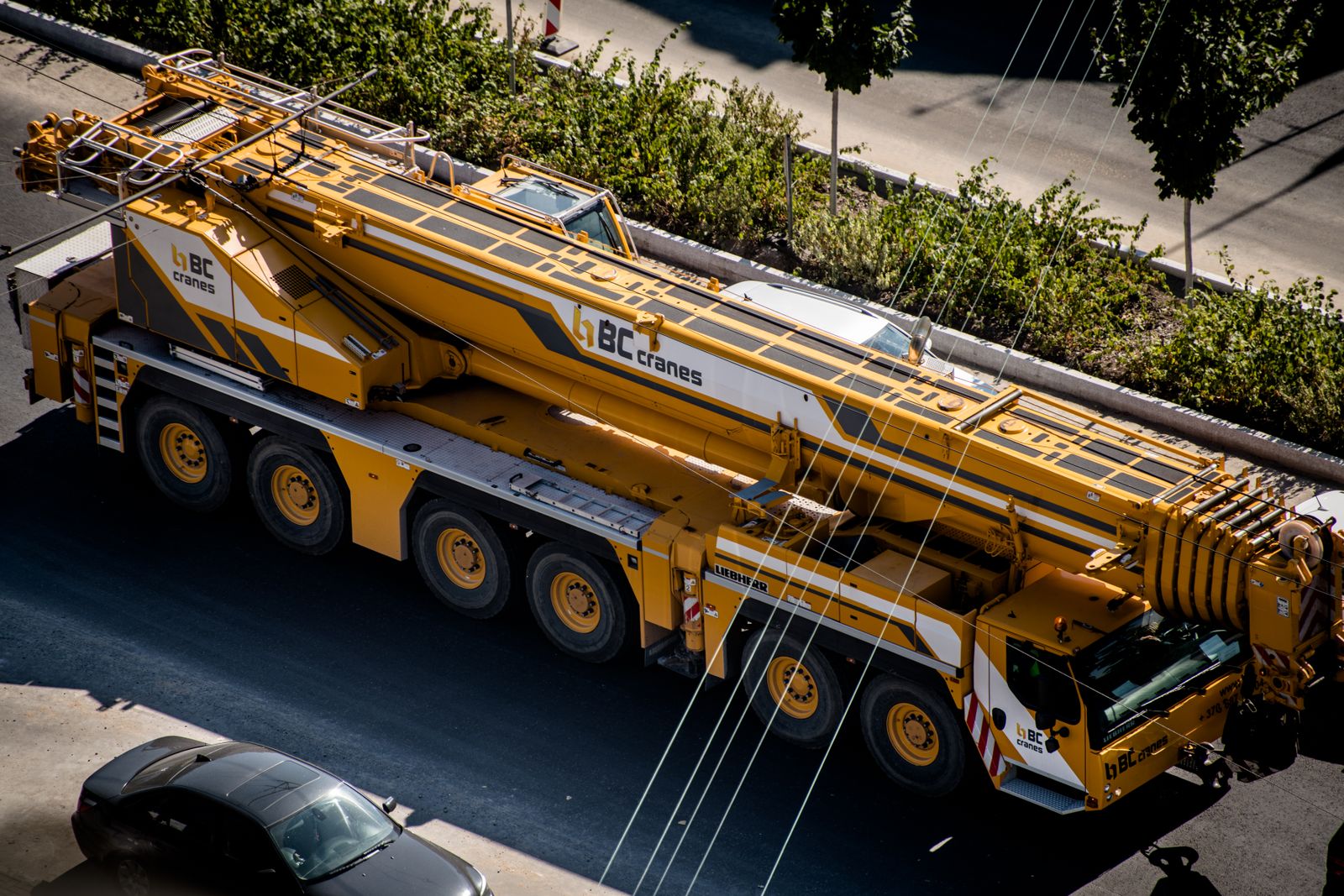
Bare Rental vs Operated Crane Rental: Who Owns the Paperwork
Who does the shift and monthly inspections, who keeps the records, and who supplies the operator card and evaluation on a bare rental versus an operated rental.